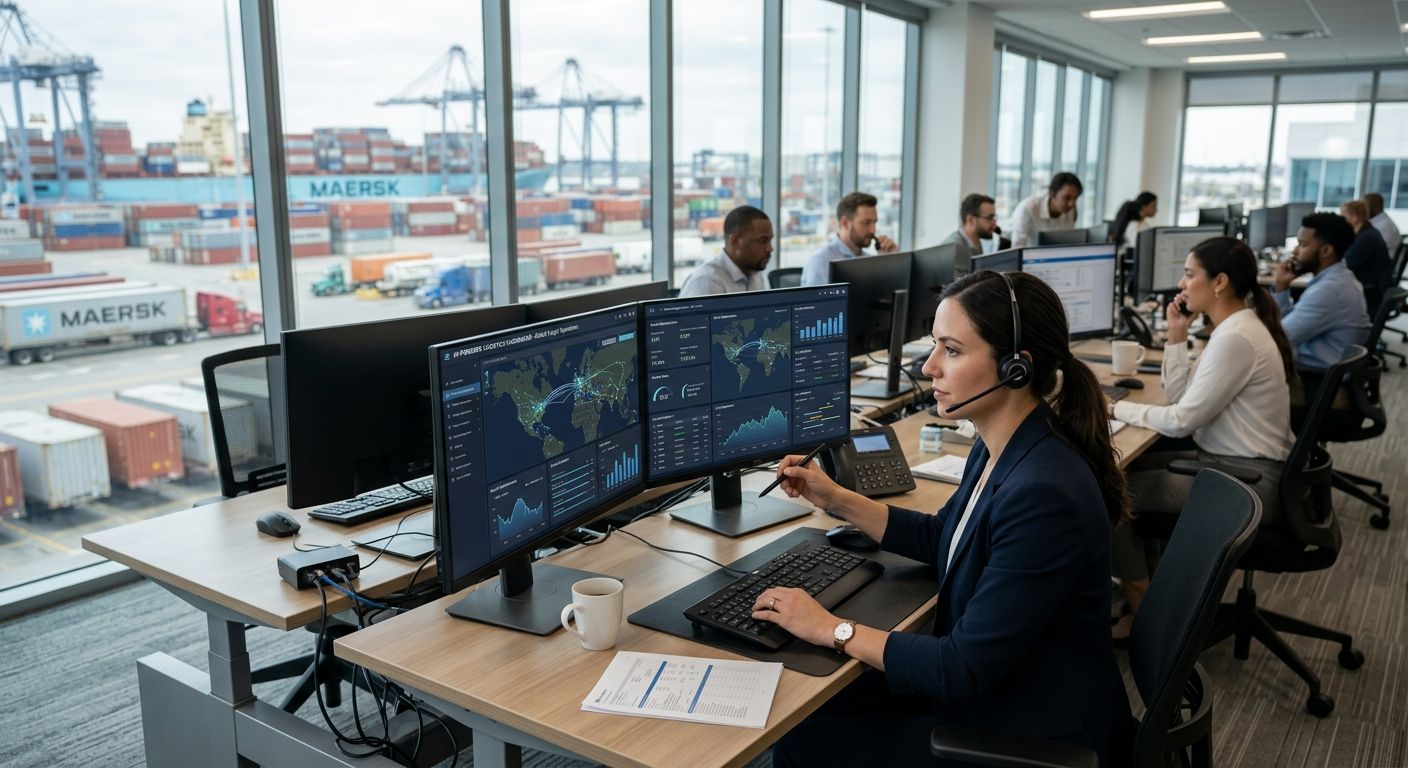
Freight broker AI is enterprise software that automates load matching, carrier vetting, rate pricing, and shipment exception handling with the aim of cutting cost-per-load and speeding tender response time. Brokerages run on thin margins and high transaction volume, so the AI has to work inside a TMS and EDI stack that never stops moving, not as a bolt-on dashboard nobody opens.
- Enterprise AI for freight brokers automates load matching, carrier vetting, and exception handling inside an existing TMS.
- KnackForge treats data integration as the first deliverable, not an afterthought, before any model touches live loads.
- Manual dispatch and spreadsheet rate quoting stop scaling once load volume outpaces a small dispatch team.
- A scoped 2026 pilot on one lane or one carrier segment beats a full-network rollout on day one.
- AI agents that monitor shipments and flag exceptions catch the highest-cost errors before they become claims.
Why enterprise AI matters for freight brokers
A brokerage's entire margin lives in the decisions made between a load posting and a signed rate confirmation — which carrier to call first, what rate to quote, whether a shipment needs a human to intervene. Every hour spent re-keying data between a TMS, a rate engine, and email is an hour a competitor's dispatcher is already on the phone. That's the gap logistics data integration services exist to close before any AI model gets near a live load.
Freight brokers also carry a compliance burden that most enterprise AI buyers don't: carrier insurance verification, FMCSA safety scores, and rate volatility that shifts by lane and by week. An AI system built for a generic enterprise workflow won't account for any of that on its own. KnackForge builds enterprise AI for freight brokers around the load lifecycle itself, not a generic chatbot layer bolted onto a TMS.
Update your load lifecycle map before you automate anything
Before a single model touches production data, write down every handoff between load posting and invoice — because that map is what tells you where AI actually saves time versus where it just moves the bottleneck.
- List every system that touches a load: TMS, rate engine, carrier portal, invoicing
- Time each manual step from posting to tender confirmation
- Flag the steps a human currently does purely because no system talks to another
- Mark which steps involve a compliance check (insurance, safety score, authority status)
Audit your carrier and rate data before you feed it to a model
AI load matching is only as good as the carrier and rate history behind it, and most brokerages have years of that data scattered across spreadsheets, a legacy TMS, and a rate engine that don't sync.
- Consolidate carrier records into one source of truth with current insurance and authority status
- Standardize lane and rate history formats across every data source
- Remove duplicate carrier entries created by manual onboarding over the years
- Tag historical loads with outcome data (on-time, claim, rejected tender)
Automate load matching and tender response
Once the data is clean, load matching is the highest-volume, lowest-complexity task to automate first — it's repetitive, rules-heavy, and every minute saved compounds across hundreds of loads a week. Start with rule-based matching logic your dispatch team already uses mentally, then layer in a model once that logic is documented.
- Automate first-pass carrier matching by lane, equipment type, and rate band
- Auto-generate tender offers to the top three ranked carriers
- Route only ambiguous or high-value loads to a human dispatcher
- Track match acceptance rate to tune the ranking logic monthly
This is where an enterprise AI partner earns its place: KnackForge's approach layers a trained matching model on top of the cleaned carrier and rate data from the previous step, rather than asking a brokerage to rebuild its dispatch logic from scratch.
Build AI-driven lane and rate pricing models
Spot rates move weekly and sometimes daily, and a pricing model that isn't retrained on recent lane data will quote stale numbers that either lose the load or lose the margin.
- Feed the model rolling 90-day lane rate history, not a static annual average
- Segment pricing models by lane density — dense lanes tolerate tighter margins than sparse ones
- Build in a manual override for any quote outside a defined confidence band
- Re-check model accuracy against actual booked rates every month, not once a quarter
Automate carrier vetting and compliance checks
Manual carrier vetting is one insurance lapse away from a costly claim, and it's the step most brokerages still do by hand because it feels too high-stakes to hand to software.
- Pull FMCSA safety scores and authority status automatically on every new carrier
- Flag insurance expiration dates 30 days before lapse, not after
- Cross-check carrier claims history before allowing high-value tenders
- Require a compliance pass before a carrier enters the automated matching pool
Deploy AI agents to monitor shipments and flag exceptions
Exception handling is where AI pays for itself fastest, because a missed delay notification or a silent detention charge costs far more than a slow load match ever does. Agents that watch shipment status in real time catch problems while there's still time to act on them.
- Monitor GPS and ELD feeds for lane deviations and delays
- Auto-notify shippers and carriers when an ETA shifts beyond a set threshold
- Flag detention and demurrage risk before it turns into a billing dispute
- Escalate only true exceptions to a human, not every minor status update
Integrate AI into your TMS and EDI stack
AI that lives outside your TMS is a second system your team has to check, which means it gets ignored within a month. Integration has to be the finish line, not an afterthought bolted on after the model works in a demo.
- Connect AI outputs directly into existing TMS workflows via API, not a separate dashboard
- Preserve EDI 204/990/214 message formats carriers and shippers already expect
- Test integration against your highest-volume carrier connections first
- Keep a rollback path in case a live integration breaks a carrier feed
Comparing your options as a freight broker
| Option | Best For | Key Limitation | Verdict |
|---|---|---|---|
| Manual dispatch + spreadsheets | Very low load volume, just starting out | Doesn't scale past a small book of business; rate quoting is error-prone | Skip once volume grows |
| Single-vendor TMS AI add-on | Automating one narrow task, like rate lookup | Doesn't connect matching, vetting, and exceptions into one workflow | Hold |
| In-house AI build | Brokerages with a dedicated data science team | Long build timeline and ongoing maintenance burden | Wait unless budget is dedicated |
| Enterprise AI partner (KnackForge) | Brokers automating the full load lifecycle | Needs clean carrier and rate data upfront to hit full accuracy | Buy for full-workflow automation |
Scope your freight AI pilot
See how KnackForge structures a load-matching and exception-handling pilot for 2026.
Common mistakes freight brokers make with AI
- Feeding messy carrier data straight into a matching model without a cleanup pass, which just automates bad decisions faster
- Automating tender response before exception handling works, so the system moves loads fast but misses the delays that cost real money
- Skipping a scoped pilot and rolling out network-wide on day one, which multiplies integration risk across every lane at once
- Bolting AI onto EDI and TMS connections as an afterthought, forcing dispatchers to check two systems instead of one
- Treating AI as a dispatcher replacement instead of a co-pilot, which erodes trust the first time the model misses an edge case a human would have caught
FAQ
What is enterprise AI for freight brokers?
Enterprise AI for freight brokers is software that automates load matching, carrier vetting, rate pricing, and shipment exception handling inside an existing TMS. It's built to handle high transaction volume and thin margins, not to replace the TMS itself.
How is AI different from a standard TMS for freight brokers?
A TMS records and routes transactions; AI adds decision logic on top of it, like ranking which carrier to tender first or flagging a shipment likely to run late. Most brokerages in 2026 run AI as a layer on their existing TMS rather than replacing it.
How much does enterprise AI cost for a freight brokerage in 2026?
Cost depends on scope: a single-task pilot (load matching only) costs far less than a full-workflow rollout covering vetting and exception handling. Get a scoped estimate from a provider based on your load volume and current tech stack rather than relying on a general figure.
Can AI replace freight dispatchers?
No, AI handles repetitive matching and monitoring tasks but routes ambiguous or high-value loads to a human. Brokerages that try to remove dispatchers entirely tend to lose the judgment calls that protect margin on unusual loads.
What data does a freight brokerage need before starting an AI pilot?
Clean carrier records with current insurance and authority status, plus at least 90 days of consistent lane and rate history. Without that baseline, a model trains on noise instead of signal.
Is enterprise AI worth it for a small-to-midsize brokerage?
It's worth it once manual dispatch and rate quoting can no longer keep up with load volume, which usually shows up as missed tenders or slow rate response. A scoped pilot on one lane segment tests the value before a full commitment.
How long does it take to deploy AI load matching?
A scoped pilot on one lane or carrier segment typically moves faster than a full-network rollout, since it avoids touching every EDI connection at once. Timeline depends heavily on how clean the existing carrier and rate data already is.
Does enterprise AI integrate with existing TMS platforms?
Yes, integration should happen via API into the existing TMS and EDI message formats rather than as a separate dashboard. A system dispatchers have to check outside their normal workflow gets ignored within weeks.
One last thing
Start with exception handling before load matching if you have to choose one first — a missed delay notification or an undetected detention charge costs more per event than a slow carrier match ever does. Brokers who lead with matching because it feels like the flashier win often find the real margin leak was sitting in the exceptions they weren't watching in 2026.


