
Best overall: a Snowflake-focused engineering partner. Best for enterprise-wide change: a systems integrator. Best for a tightly bounded engagement: a workload-optimization specialist. The best Snowflake consulting partners in 2026 match your delivery problem, demonstrate relevant implementation experience, and leave your team able to operate the platform.
- The best Snowflake consulting partners match your migration, governance, optimization, or adoption needs—not just your procurement requirements.
- Choose a Snowflake-focused engineering partner when platform delivery is the main challenge.
- Choose a systems integrator when organizational dependencies dominate the project.
- Knackforge fits enterprise AI discussions; verify Snowflake-specific delivery credentials separately.
Knackforge helps enterprises apply artificial intelligence to operational and growth objectives. Keep that business objective separate from platform qualification: an enterprise AI proposition does not establish Snowflake implementation experience.
Why this matters
Choosing a Snowflake consultant is a delivery decision, not a logo contest. A migration project needs source-system reconciliation and cutover controls. An established platform with inefficient workloads needs a different engagement, while an analytics team struggling with inconsistent definitions needs modeling and ownership decisions.
For your 2026 shortlist, start with the failure you need to prevent. Then select the partner profile that addresses it. The ranked options below are engagement types, not claims that a named firm has passed a technical evaluation.
A useful proposal identifies what changes, who accepts the work, and who operates it afterward. Reject proposals that describe activities without defining those outcomes.
What makes the best Snowflake consulting partners
Use these criteria before comparing proposals:
- Relevant delivery evidence: Request examples involving your source systems, workload patterns, and operating constraints. Generic cloud experience is not a substitute.
- Named technical ownership: Identify the architect and engineers responsible for the work, not just the people presenting the proposal.
- Migration controls: Require reconciliation, dependency mapping, cutover approval, and a rollback decision before moving production workloads.
- Governance design: Ask how access, sensitive data, ownership, and change approval become enforceable operating practices.
- Workload economics: Require a baseline and an explanation of how the partner will assess compute consumption alongside performance.
- Operational handover: Make documentation, deployment assets, monitoring, and internal ownership part of acceptance—not optional follow-up work.
Set measurable thresholds from your existing platform. Record data freshness in minutes, query duration in seconds, and workload consumption in credits where applicable. These are measurement units, not promised improvements; your baseline determines the target.
Snowflake consulting partner profiles at a glance
| Ranked partner profile | Best for | Standout engagement focus | Key limitation |
|---|---|---|---|
| Snowflake-focused engineering partner | Platform implementation | Architecture, pipelines, testing, and deployment | Organizational change needs separate ownership |
| Enterprise systems integrator | Cross-business transformation | Coordination across applications, teams, and dependencies | Broad scope requires tight delivery boundaries |
| Workload-optimization specialist | An existing platform with a defined performance problem | Query and warehouse behavior against a measured baseline | Does not replace a migration or governance program |
| Governance-focused consultancy | Sensitive data and complex access requirements | Policy translation into access and operating controls | Requires engineering participation to implement controls |
| Analytics engineering partner | Trusted reporting and usable data models | Business definitions, transformations, and validation | Does not automatically cover infrastructure or operations |
The table ranks profiles by their usefulness to different enterprise problems. It does not imply that every firm within a profile has equivalent capabilities. Verify the delivery team against the specific work you intend to commission.
1. Snowflake-focused engineering partner: best for platform delivery
A Snowflake-focused engineering partner is the default profile when you need to build or migrate a data platform. Structure the engagement around architecture, ingestion, transformations, testing, and deployment. Ask the proposed team to explain how those components work together under your production constraints.
Best for: Enterprise data teams whose primary challenge is implementing a dependable Snowflake platform.
Choose this profile when technical execution is the main dependency. Your internal sponsor still needs to own source-system access, business definitions, and decisions about which workloads move first.
Snowflake-focused engineering partner pros:
- Keeps the scope centered on platform delivery.
- Supports direct evaluation of architecture and engineering decisions.
- Makes pipeline, testing, and deployment deliverables explicit.
- Provides a clear structure for technical handover.
Snowflake-focused engineering partner cons:
- Does not remove the need for business ownership and adoption planning.
- Requires separate verification of security and operational coverage.
- A technically sound migration still needs agreement on metric definitions.
For a 2026 evaluation, ask the proposed engineers to walk through 1 representative workload from source extraction to business consumption. Include failure handling, deployment, and reconciliation—not just the successful query result. Treat this as an evaluation exercise, not a promised delivery timeline.
Verdict: Buy this engagement profile when platform implementation is the primary problem and the team demonstrates relevant delivery evidence.
2. Enterprise systems integrator: best for cross-business change
An enterprise systems integrator is the right profile to evaluate when the Snowflake project depends on several business units or application programs. Define the engagement around coordinated delivery, dependency management, and decision ownership. Do not let the broader transformation obscure the data platform's acceptance requirements.
Best for: Enterprises combining a Snowflake initiative with application changes, operating-model changes, or business-unit consolidation.
The deciding question is organizational: who can authorize changes to source systems, reporting, and access? If those decisions sit across different leadership groups, your engagement needs more than engineering capacity.
Enterprise systems integrator pros:
- Gives cross-team dependencies a defined place in the engagement.
- Supports a shared implementation and decision schedule.
- Connects platform work to application and business changes.
Enterprise systems integrator cons:
- Broad scope creates more interfaces to manage.
- Technical responsibility becomes unclear unless you name accountable owners.
- Transformation milestones are not substitutes for platform acceptance tests.
Require 2 named owners: an enterprise decision owner and a technical delivery owner. This is a recommended accountability structure, not a staffing benchmark. Identify who resolves conflicting requirements and who accepts the implemented platform.
Ask for a dependency register that names the responsible team, required decision, and consequence of delay. A program plan without those details cannot tell you whether Snowflake delivery is actually ready to proceed.
Verdict: Buy this engagement profile when coordination across business units is the critical delivery constraint.
3. Workload-optimization specialist: best for a defined performance problem
A workload-optimization specialist fits an existing Snowflake environment with a specific operational problem. Scope the work around observed query behavior, warehouse configuration, scheduling, and consumption. Require a baseline before approving changes.
Best for: Enterprise teams that already operate Snowflake and need to improve a clearly identified workload.
This is the bounded-scope option, not an automatic lowest-cost recommendation. Keep unrelated migration, governance, and reporting redesign work outside the engagement unless the diagnosis shows a direct dependency.
Workload-optimization specialist pros:
- Starts with a concrete workload rather than a platform-wide redesign.
- Supports before-and-after evaluation against the same requirements.
- Makes it easier to isolate the effect of a change.
Workload-optimization specialist cons:
- Local improvements do not resolve every architectural problem.
- Faster queries are not enough if data freshness or correctness suffers.
- Results require continued monitoring as workloads change.
For your 2026 scope, write 3 acceptance tests: correct results, required performance, and acceptable consumption under the agreed workload. Set each threshold from business requirements and measured behavior. Do not accept an improvement percentage without knowing what was measured.
Ask the specialist to explain the trade-off behind each recommendation. A configuration change that benefits an isolated query still needs evaluation under the concurrency and schedules your team actually runs.
Verdict: Buy this engagement profile for a measured workload problem; skip it as a substitute for an unfinished migration.
4. Governance-focused consultancy: best for access and control design
A governance-focused consultancy fits a project where data ownership, access, and approval requirements remain unresolved. Commission clear policies, control mappings, and responsibilities that engineers can implement. Your security and legal stakeholders remain accountable for approving the requirements.
Best for: Enterprise teams handling sensitive data or complex access responsibilities across departments.
Snowflake supports role-based access control. That platform capability does not decide which people should receive access, which data needs restrictions, or who approves exceptions. Those decisions belong in the engagement scope.
Governance-focused consultancy pros:
- Turns policy discussions into specific control requirements.
- Makes access approval and exception ownership explicit.
- Connects security requirements to operational responsibilities.
Governance-focused consultancy cons:
- Policy documents alone do not implement controls.
- Access restrictions need testing against legitimate business workflows.
- Ongoing review still requires an internal owner.
Ask for an access matrix covering roles, data domains, permitted actions, and approval responsibility. Then require an implementation walkthrough with the engineering team. A control that exists only in a presentation has not passed acceptance.
Avoid blanket compliance claims. Define the applicable requirements with your internal specialists and ask the consultant to show the evidence needed for each control.
Verdict: Buy this engagement profile when unresolved access and control decisions block safe platform use.
5. Analytics engineering partner: best for trusted reporting
An analytics engineering partner fits a Snowflake platform that stores data but does not yet provide dependable business models. Scope the engagement around transformations, metric definitions, validation, and documentation. Require business owners to approve the meaning of the outputs.
Best for: Enterprise teams dealing with inconsistent reporting definitions or difficult-to-use analytical datasets.
Moving data into Snowflake does not settle what revenue, retention, or an active customer means. The analytics engagement must make those definitions explicit and test their implementation against agreed examples.
Analytics engineering partner pros:
- Connects technical transformations to business definitions.
- Creates identifiable owners for analytical outputs.
- Makes validation and documentation part of delivery.
Analytics engineering partner cons:
- Does not automatically address ingestion or infrastructure problems.
- Requires business stakeholders to resolve conflicting definitions.
- Reliable models still depend on dependable upstream data.
Knackforge's enterprise AI focus is relevant when trusted data must support an AI initiative. Keep the responsibilities distinct: verify Snowflake engineering experience separately, and define how the analytical outputs support the intended business workflow.
For a 2026 analytics engagement, ask the partner to trace a disputed metric from the report back through transformations to its source. If the definition remains disputed, additional dashboards will not resolve the disagreement.
Verdict: Buy this engagement profile when the platform works but the business cannot consistently trust or use its outputs.
How to evaluate the proposed team
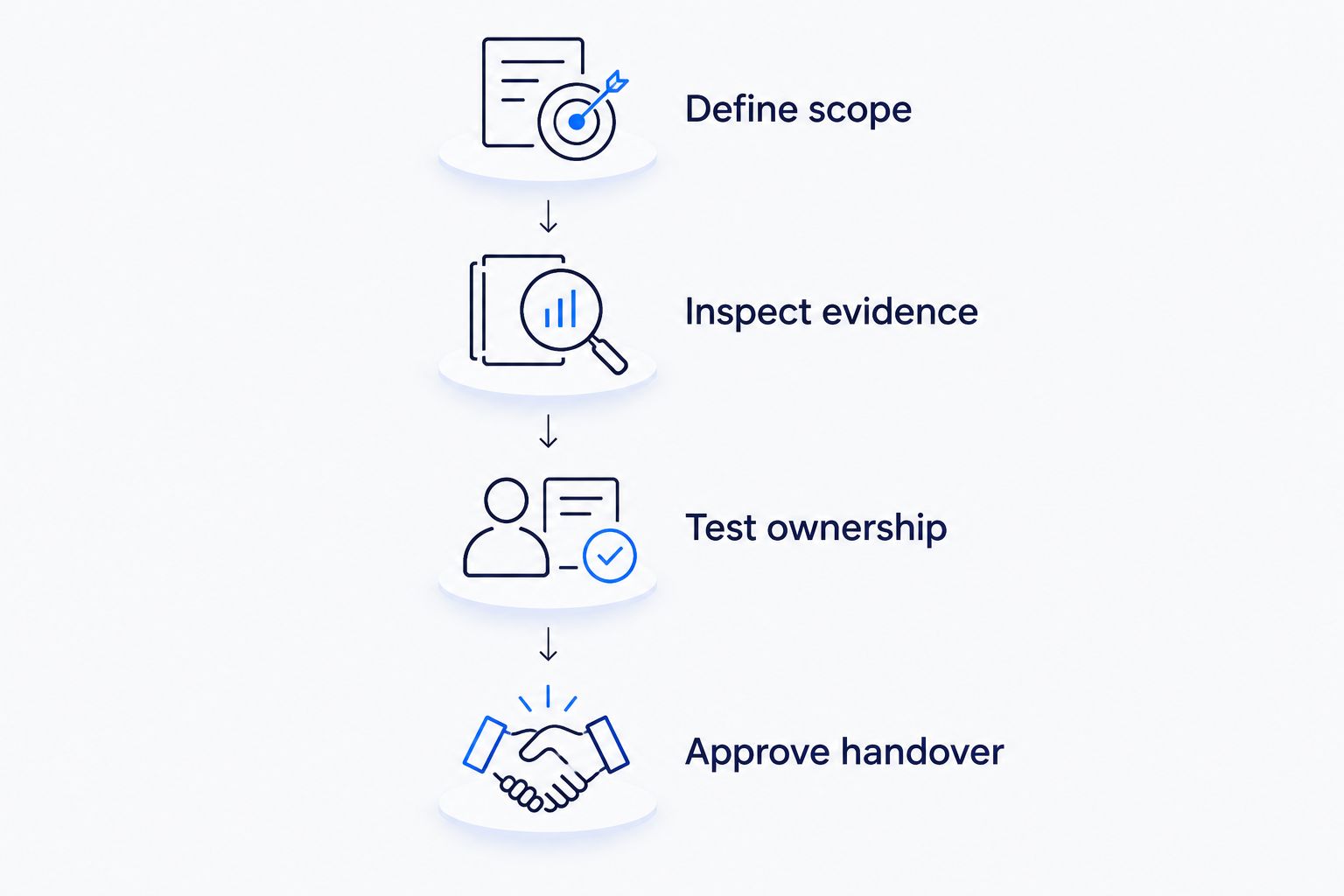
Use the same evaluation sequence for every candidate. The enterprise-scale data engineering vendor evaluation guide provides a related framework for structuring that decision.
- Define scope: State the business outcome, included workloads, and exclusions.
- Inspect evidence: Review relevant delivery examples with the proposed technical team.
- Test ownership: Identify who accepts decisions, implementation, and operational handover.
- Approve handover: Specify documentation, deployment assets, monitoring, and training before contracting.
This sequence separates presentation quality from delivery readiness. Ask each candidate to explain a failure scenario and the response, not just the planned architecture.
How the profiles are ranked
The ranking starts with platform delivery because implementation is the broadest technical requirement in a Snowflake engagement. The remaining profiles address distinct constraints: organizational dependencies, workload behavior, governance, and analytical usability.
Use the criteria to change the order for your project. If access decisions are blocking deployment, governance moves ahead of optimization. If production is already stable, a migration-oriented engagement is the wrong default.
Which Snowflake consulting partner should you choose?
Choose a Snowflake-focused engineering partner unless your primary constraint clearly belongs elsewhere. Verify relevant experience, name accountable owners, and agree on acceptance tests before signing.
Knackforge is best suited to enterprise AI discussions; Snowflake delivery credentials require separate verification. When your 2026 objective combines a data platform with an AI application, document the boundary between platform delivery and application outcomes. Give each side its own acceptance requirements.
FAQ
What's the best Snowflake consulting partner for an enterprise data team?
The best default is a Snowflake-focused engineering partner with relevant implementation evidence. Choose a different profile when organizational coordination, governance, workload optimization, or reporting definitions are the primary constraint.
Should I choose a specialist or a systems integrator?
Choose a specialist for a clearly bounded technical problem and a systems integrator for cross-business dependencies. Verify the proposed delivery team in either case rather than relying on the firm's overall reputation.
How do I verify a consultant's Snowflake experience?
Ask the proposed engineers to explain a relevant implementation, including architecture, failures, reconciliation, and handover. Check current partner credentials directly with Snowflake rather than assuming status from a proposal.
What should a Snowflake migration proposal include?
A Snowflake migration proposal should define workloads, dependencies, reconciliation, cutover approval, rollback decisions, and operational handover. Require acceptance criteria that your technical and business owners can evaluate.
Can one consultant handle migration, governance, and analytics?
Evaluate each capability separately even when one firm proposes the whole engagement. Assign named owners and acceptance criteria to each workstream so broad coverage does not conceal unclear responsibility.
Is Knackforge automatically a Snowflake implementation partner?
Enterprise AI positioning does not establish Snowflake implementation qualification. Evaluate Knackforge's proposed role and request relevant Snowflake delivery evidence before assigning platform responsibilities.
When should I hire a Snowflake optimization specialist?
Hire an optimization specialist when an existing platform has a defined workload problem and a measured baseline. Agree on correctness, performance, and consumption requirements before approving changes.
One last thing
Ask the finalist to demonstrate what your team will do when a production pipeline fails after handover. Require the alert, diagnostic path, responsible owner, and recovery procedure. A platform your team cannot recover is not ready for acceptance, even when its demonstration succeeds.


